Categories
Mem²CNN News

Assistant Professorship for Vasileios Ntinas

On 1st August 2025 Vasileios Ntinas joined the Edge Computing and Networking Group of the Department of Electronic Systems at Aalborg University as an Assistant Professor with Tenure-Track.

We wish him all the best for his further path in research and teaching and thank him for his contributions to the project Mem²CNN.

Categories
News

New Project LEOMEM: Radiation-Resistant In-Memory Computing for Space

Sending electronics into space is no small feat. In Low-Earth Orbit, radiation, temperature extremes, and the vacuum pose challenges that conventional memory simply cannot withstand. The LEOMEM project, part of the DFG Priority Program MemrisTec and funded by the DFG starting in 2025, is addressing these issues. Researchers at TU Munich, University of Rostock, and IHP – Leibniz-Institute for Innovative Microelectronics, led by Prof. Amelie Hagelauer, Prof. Marc Reichenbach, and Prof. Christian Wenger, are developing radiation-resistant RRAM-based memory cells, building on results from the earlier MIMEC project.

First prototype chips, combining enclosed layout transistors (ELTs) with RRAM devices, have already been fabricated at IHP. These cells will undergo multi-stage testing for total ionizing dose (TID), single event effects (SEE), and extreme temperatures. Could memory survive these harsh conditions while remaining energy-efficient? That is one of the key questions LEOMEM seeks to answer.

At the system level, behavioral data from the devices will feed into a design framework to explore secure and adaptive memory architectures. Adaptive error correction codes will work alongside analog control, digital interfaces, and controllers in a fully integrated ASIC prototype. The ultimate goal is a memory system optimized for reliability, energy efficiency, and performance in space missions, paving the way for the next generation of in-memory computing beyond Earth.

Categories
News

New Project PrintMEM: Printable Memristive Logic for Flexible Sensors

How can electronic circuits become flexible enough to wrap around sensors in robotics, wearable medical devices, or smart systems? Researchers from Karlsruhe Institute of Technology (KIT) and Ruprecht-Karls-University Heidelberg, led by Prof.Jasmin Aghassi-Hagmann and Prof.Nima Taherinejad, are exploring this question as part of the DFG Priority Program MemrisTec. The PrintMEM project funded by the DFG since 2025 is advancing printed memristor technology, aiming to bring high-performance in-memory computing directly into flexible and low-power devices.

At the heart of PrintMEM are inorganic memristors made from metal oxides with particle admixtures, carefully designed to reduce variability between components. These tiny devices can switch states in just 100 nanoseconds—several orders of magnitude faster than conventional printed thin-film transistors. But speed is only part of the story. The researchers are investigating multiple circuit architectures—including IMPLY, MAGIG, FELIX OR, and SIXOR—and combining them into functional subunits like sorter circuits.

The project spans the entire development chain, from device fabrication and behavioral modeling to endurance testing and circuit design. By integrating these building blocks into printed logic components, PrintMEM seeks to demonstrate energy-efficient, reliable, and scalable electronics suitable for flexible sensors, robotics, and medical applications. Could this technology redefine how computation is integrated into next-generation devices? By pushing the limits of printable inorganic electronics, PrintMEM is opening a pathway toward highly adaptable and powerful edge-computing systems.

Categories
News

New Project MuCoReMuCoRe: Multi-Context FPGAs Powered by Memristive MemoryNew Project MuCoRe

In an era where computing demands are constantly growing, the MuCoRe project is exploring how a single chip could handle multiple hardware configurations simultaneously. Researchers at the University of Rostock and IHP – Leibniz-Institute for Innovative Microelectronics, led by Prof. Marc Reichenbach and Prof. Christian Wenger, are developing multi-context FPGAs (MC-FPGAs) using multi-bit resistive RAM (RRAM) cells as part of the DFG Priority Program MemrisTec. Funded by the DFG starting in 2025, the project aims to combine the speed and flexibility of FPGAs with the efficiency and density of memristive memory.

At the heart of MuCoRe is the multi-level capability of RRAM cells. Each cell can store eight states, supporting up to three hardware configurations per cell and drastically reducing the area and power requirements compared to conventional SRAM-based designs. Specialized analog-to-digital converters (ADCs) provide reliable, energy-efficient readout, and the non-volatile nature of RRAM eliminates the need to maintain inactive configurations.

Beyond individual components, MuCoRe is taking a system-wide approach. The team is using open-source tools and iterative design methods to evaluate critical metrics, including area, power, and performance. By merging analog memristive memory with digital FPGA logic, the project is creating a flexible, energy-efficient computing platform. If successful, MuCoRe could redefine how reconfigurable digital systems are built, providing faster, more adaptable hardware for next-generation applications.

Categories
News

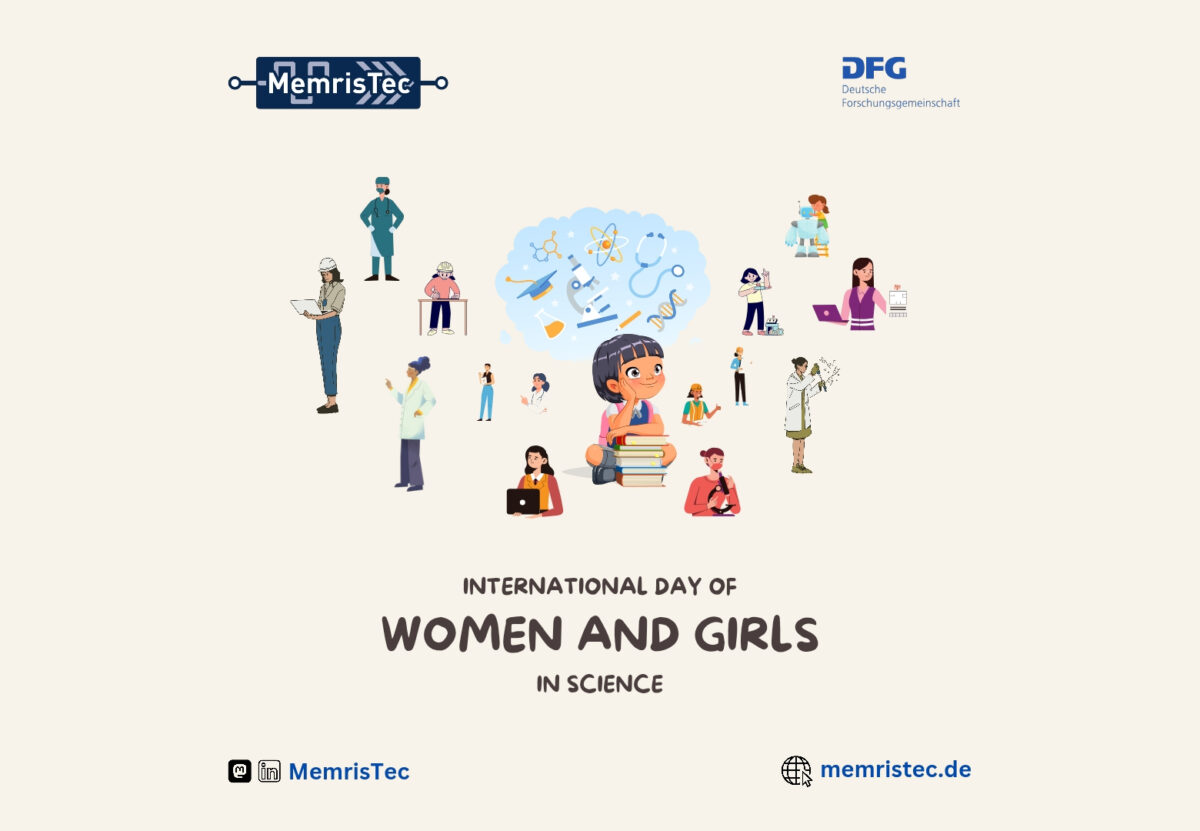
International Day of Women and Girls in Science

Science knows no gender, and we believe that diverse perspectives are essential to driving innovation and solving the world’s most pressing challenges. MemrisTec is dedicated to create opportunities for scientists from all genders to explore, learn and shape the future of computing.

💡 To all the young women out there dreaming of careers in STEAM: You belong in science, and your contributions will shape the world.

Let’s work together to ensure that every girl knows she can be a scientist, an innovator, and a leader in her field. 🌱✨

Categories
News

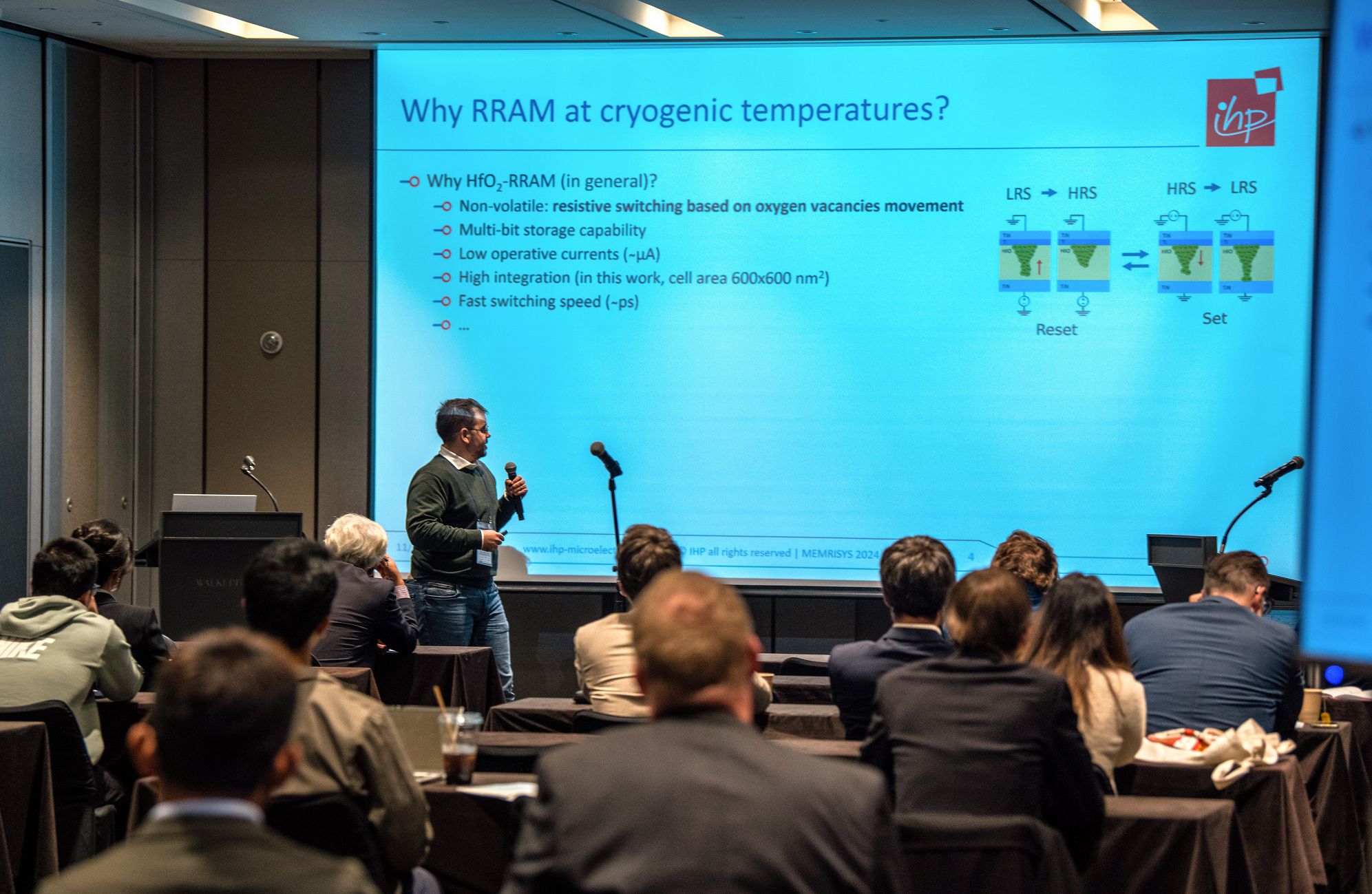
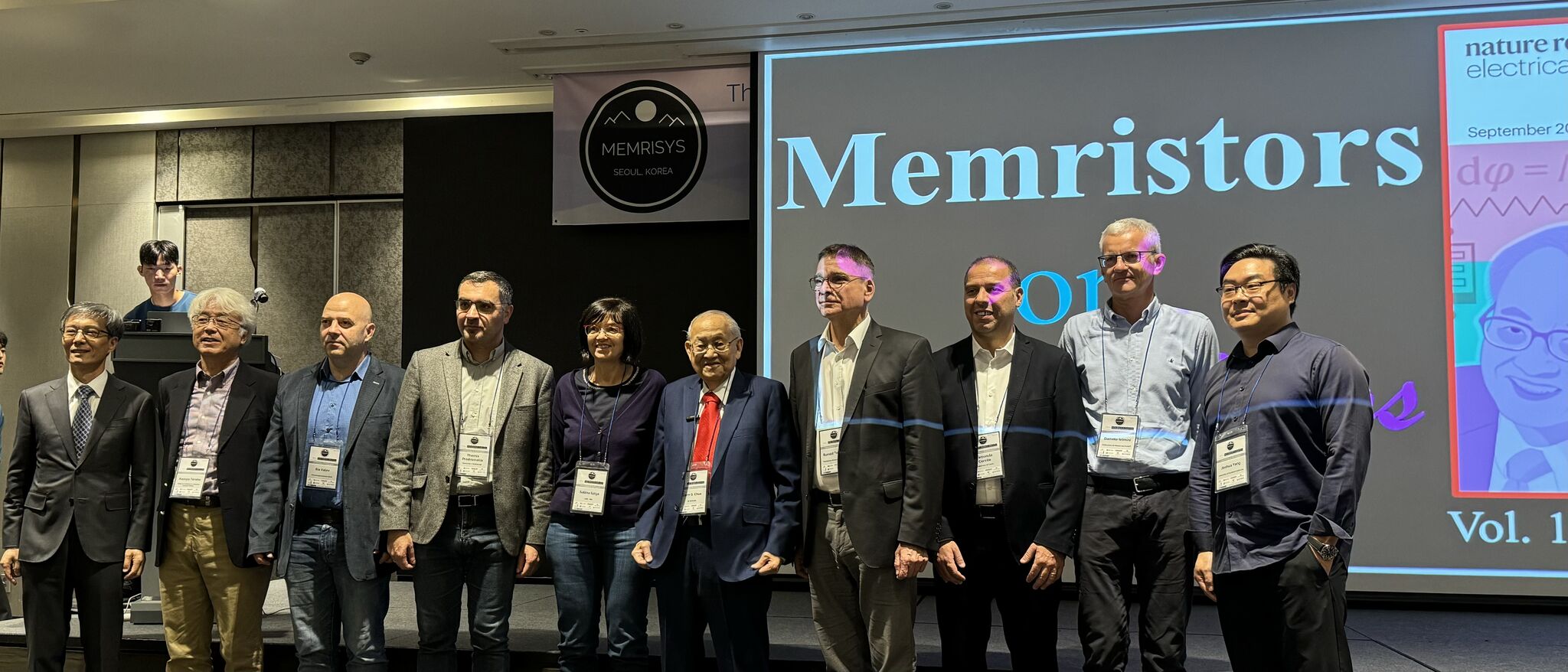
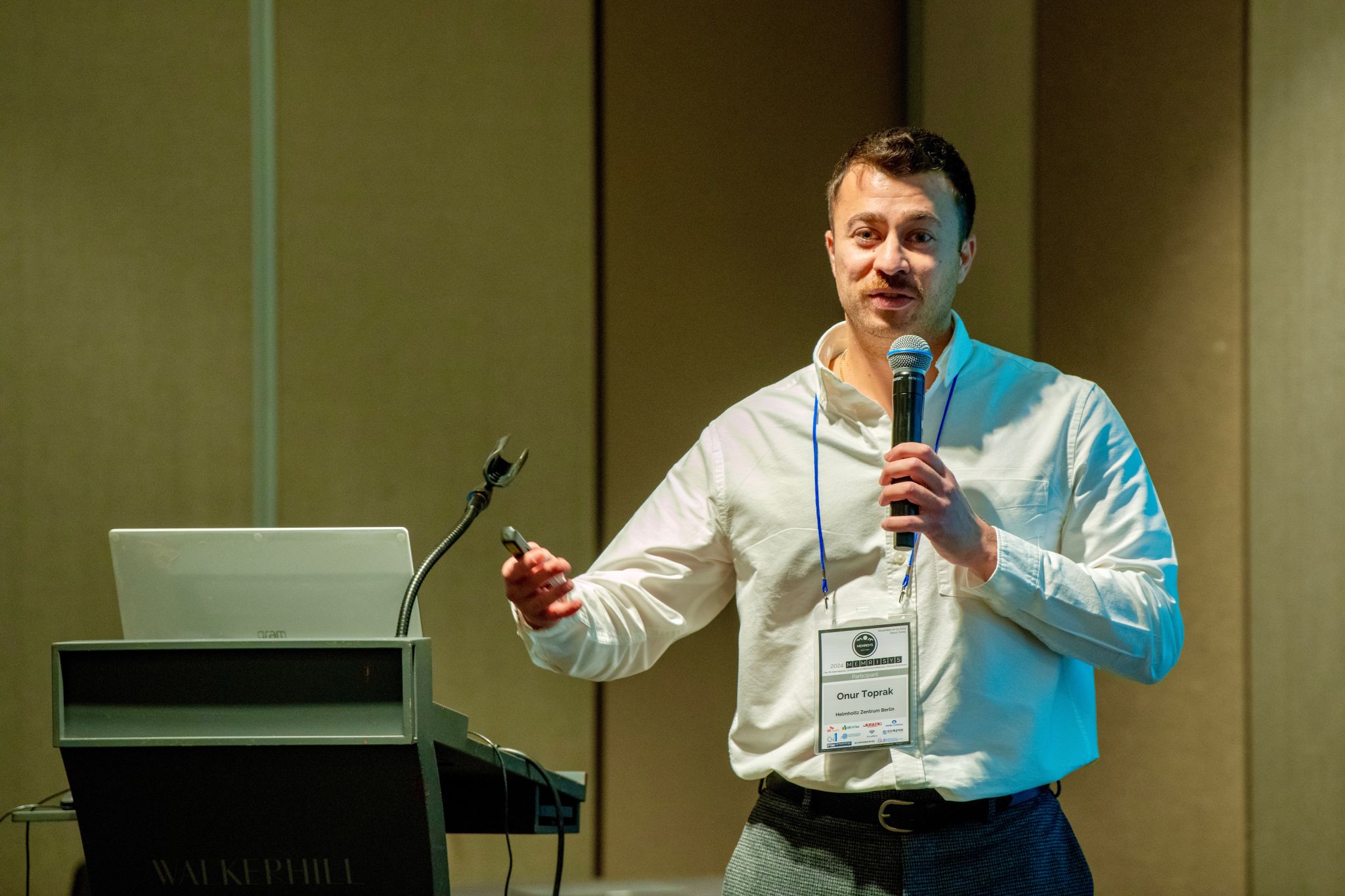
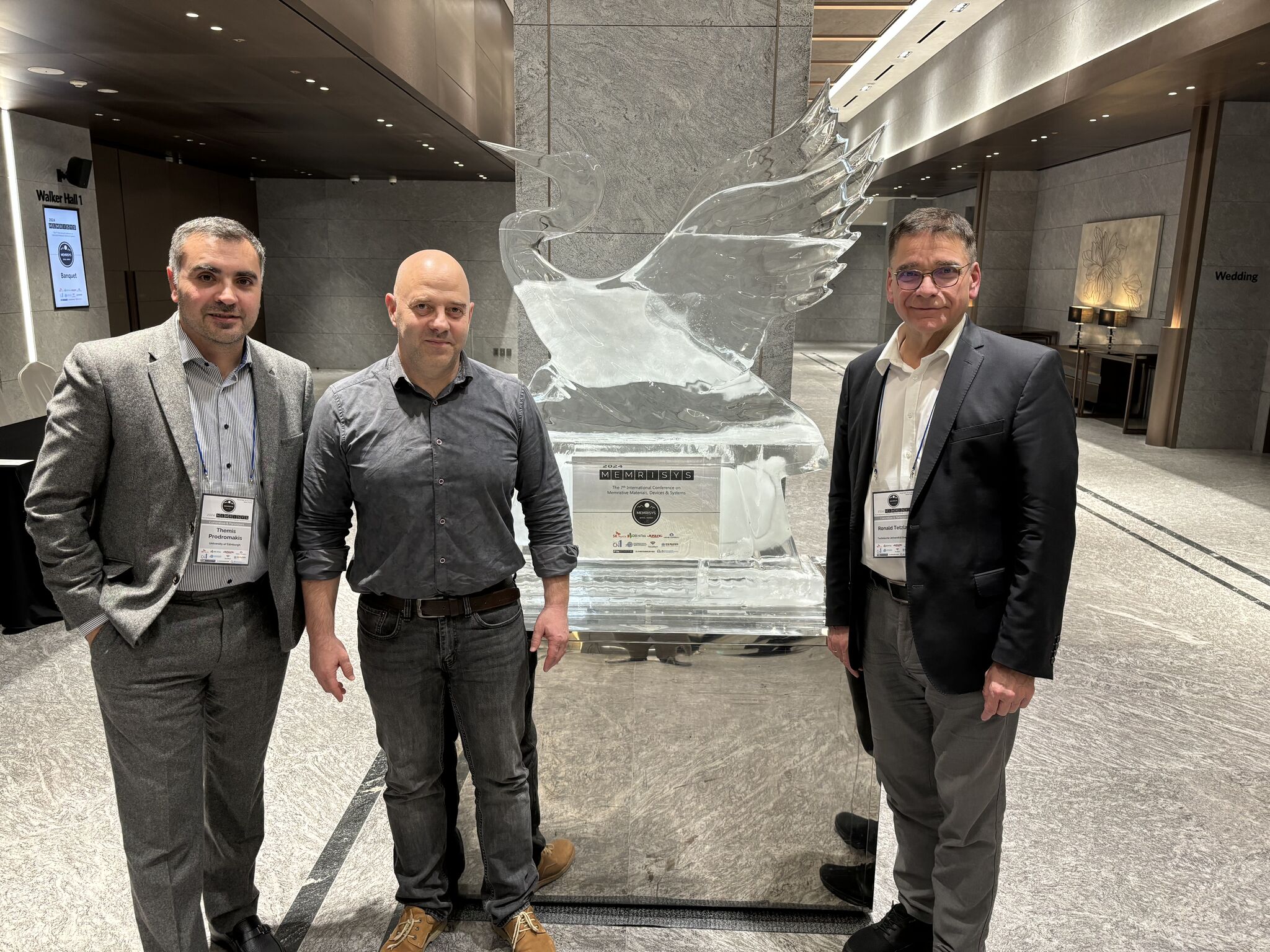
MemrisTec at MEMRISYS in Seoul, Korea

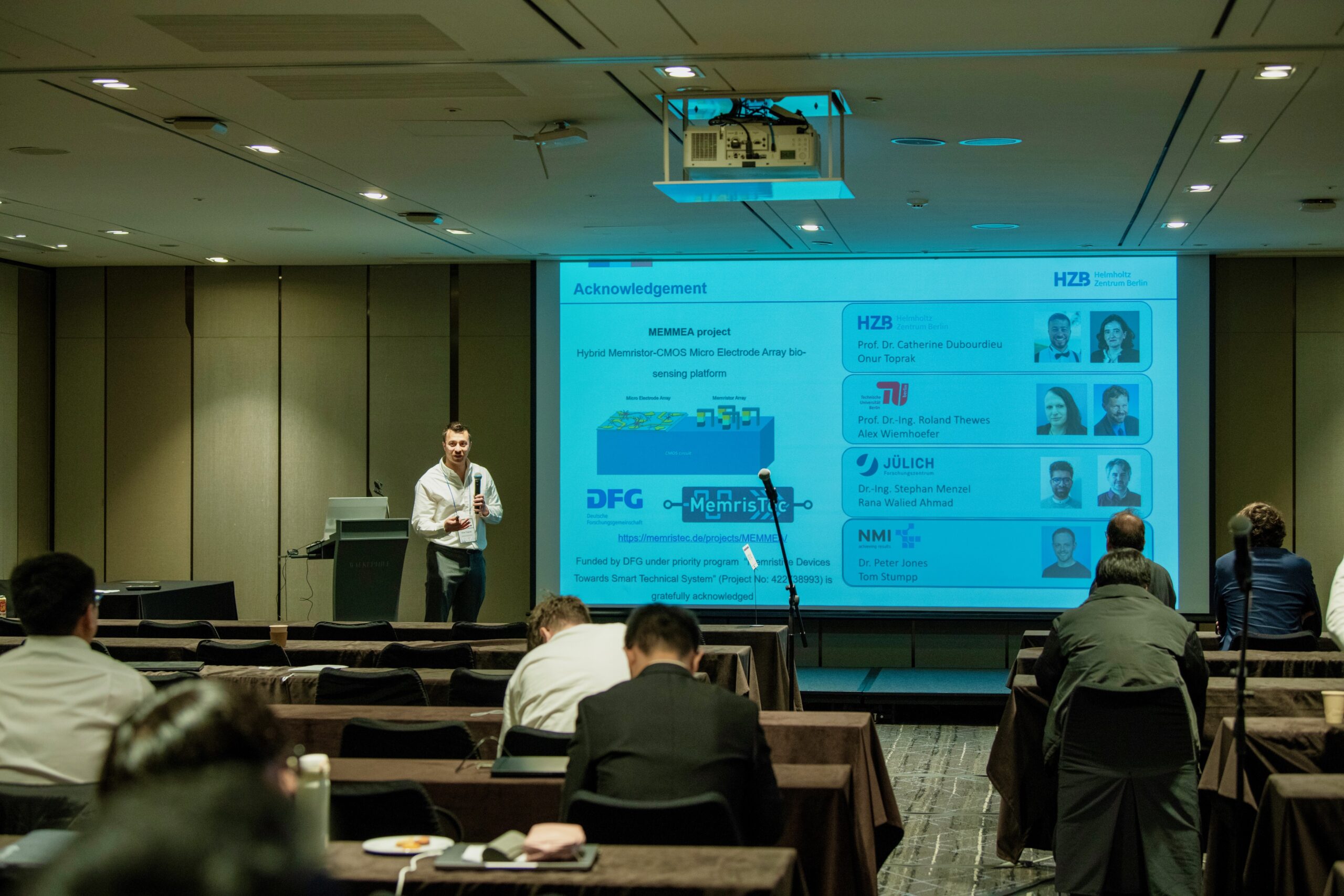
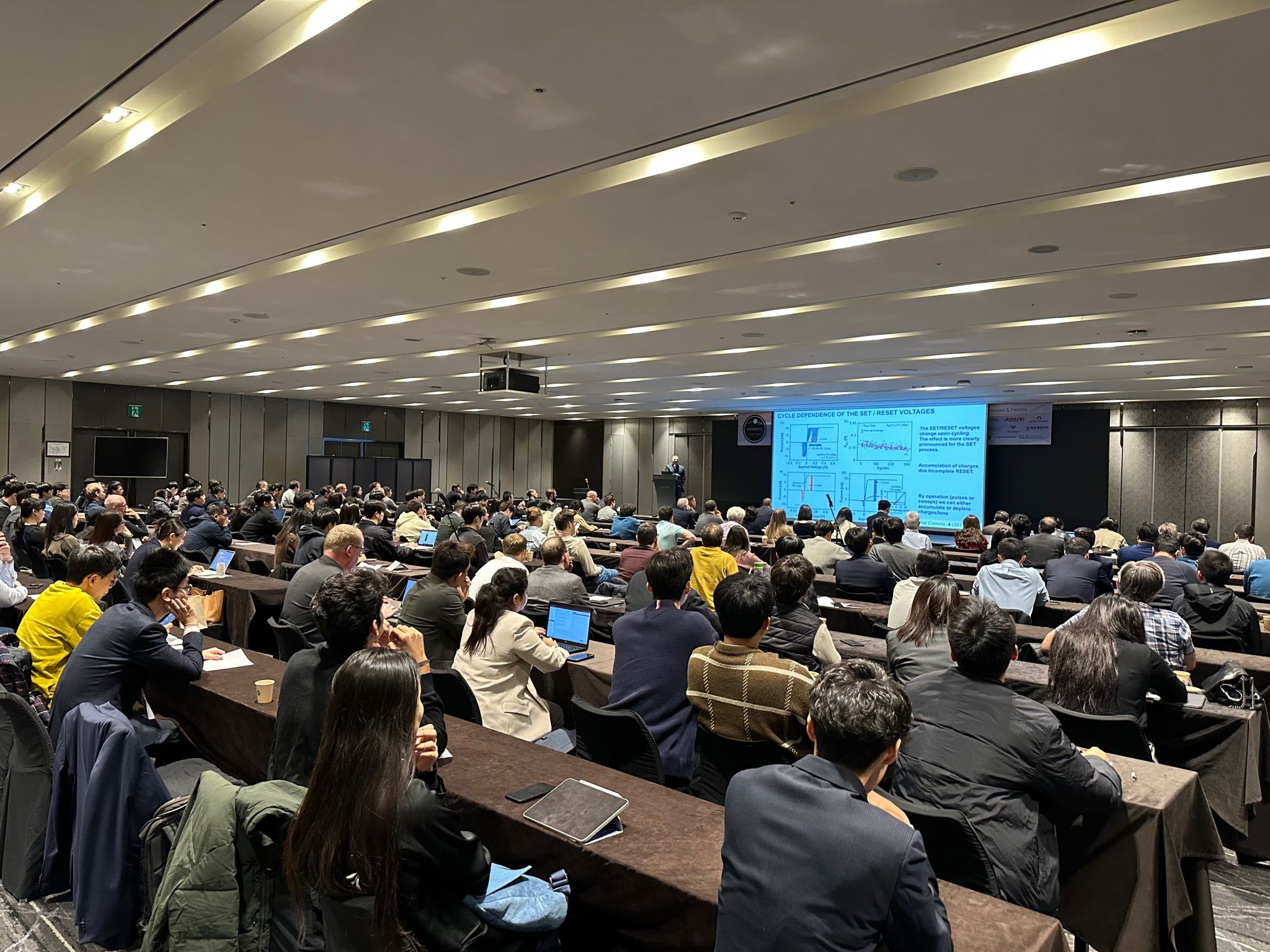
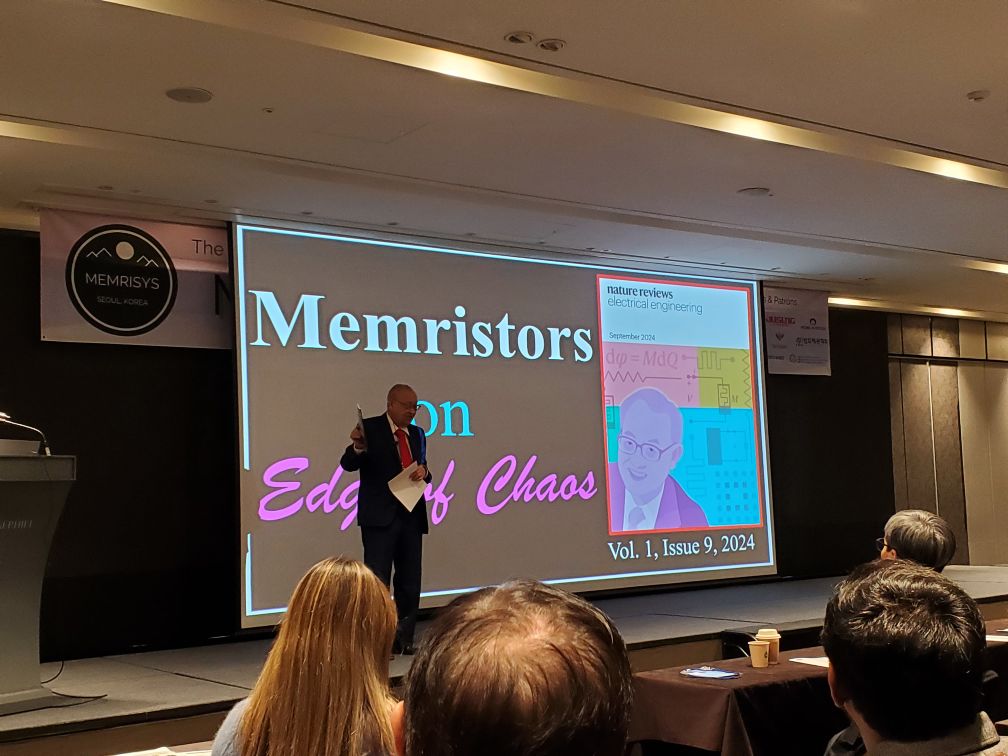
Many members of the priority program MemrisTec attended the 7th International Conference on Memristive Materials, Devices & Systems (MEMRISYS 2024) that took place at in Seoul (Korea) from 10 to 13 November 2024.

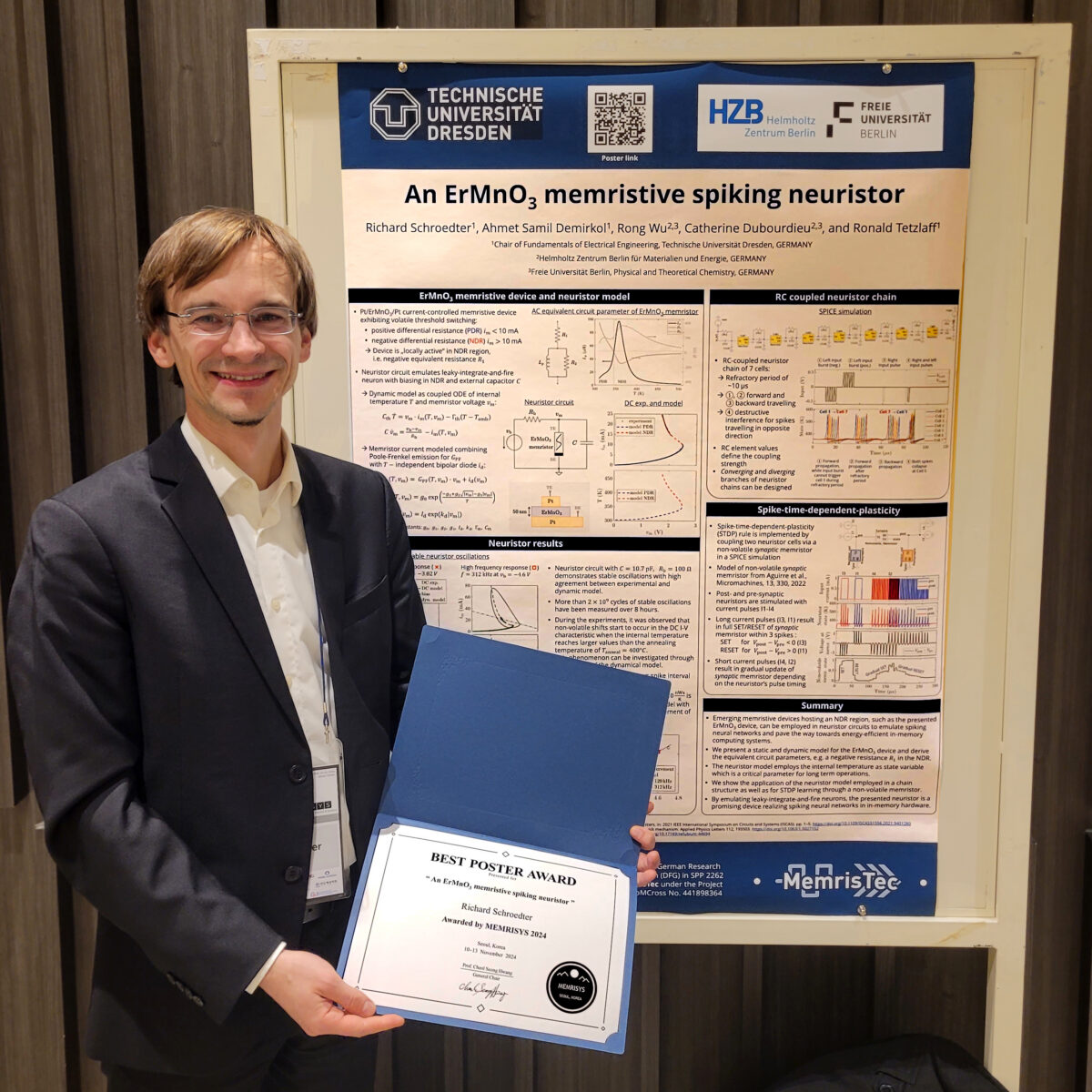
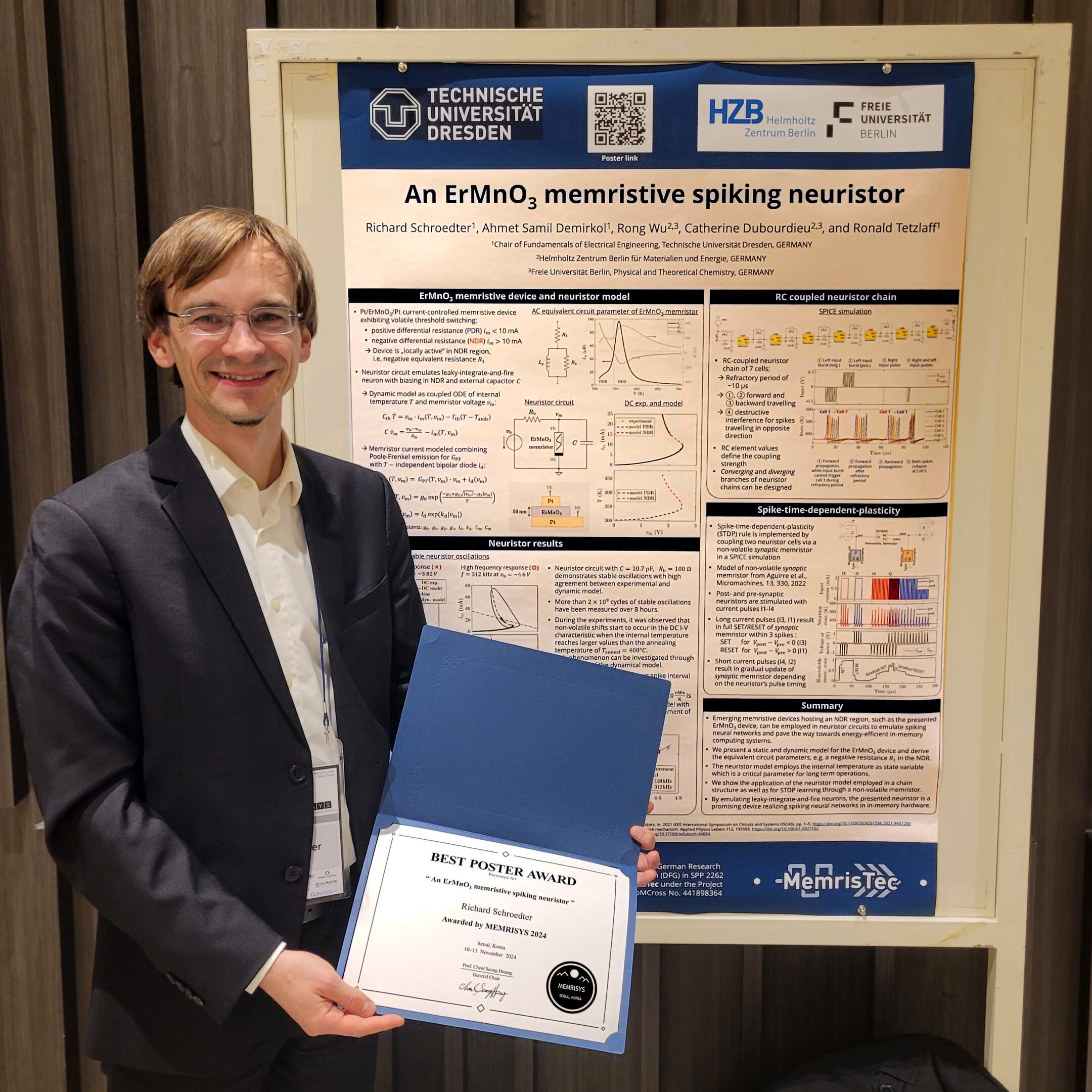
A special success was the given Best Poster Award for Richard Schroedter presenting the poster “An ErMnO3 memristive spiking neuristor” for his team with the contributors Ahmet Şamil Demirkol, Rong Wu, Catherine Dubourdieu, and Ronald Tetzlaff.

Keynote of Leon Chua

Categories
News

Doctoral Milestone Achieved: Ziang Chen Defends PhD Thesis

M.Sc. Ziang Chen has successfully completed his doctoral dissertation and is now awarded the degree Dr. rer. nat. at Friedrich Schiller University Jena on 22 October 2024.

His dissertation, titled “Investigation of Sneak Paths in Passive Crossbar Array Based on Electro-Forming Free Analog Memristive Devices and Their Applications in Advanced Encryption Systems,” explored the behavior of sneak currents in passive memristive crossbar arrays and examined how such effects impact advanced encryption and hardware system applications. The doctoral research was supervised by Dr. Heidemarie Schmidt.

The successful defense marks the completion of Ziang Chen’s doctoral research in the field of memristive devices and their system-level applications.

Categories
News

MemrisTec at Nature Conference on Neuromorphic Computing

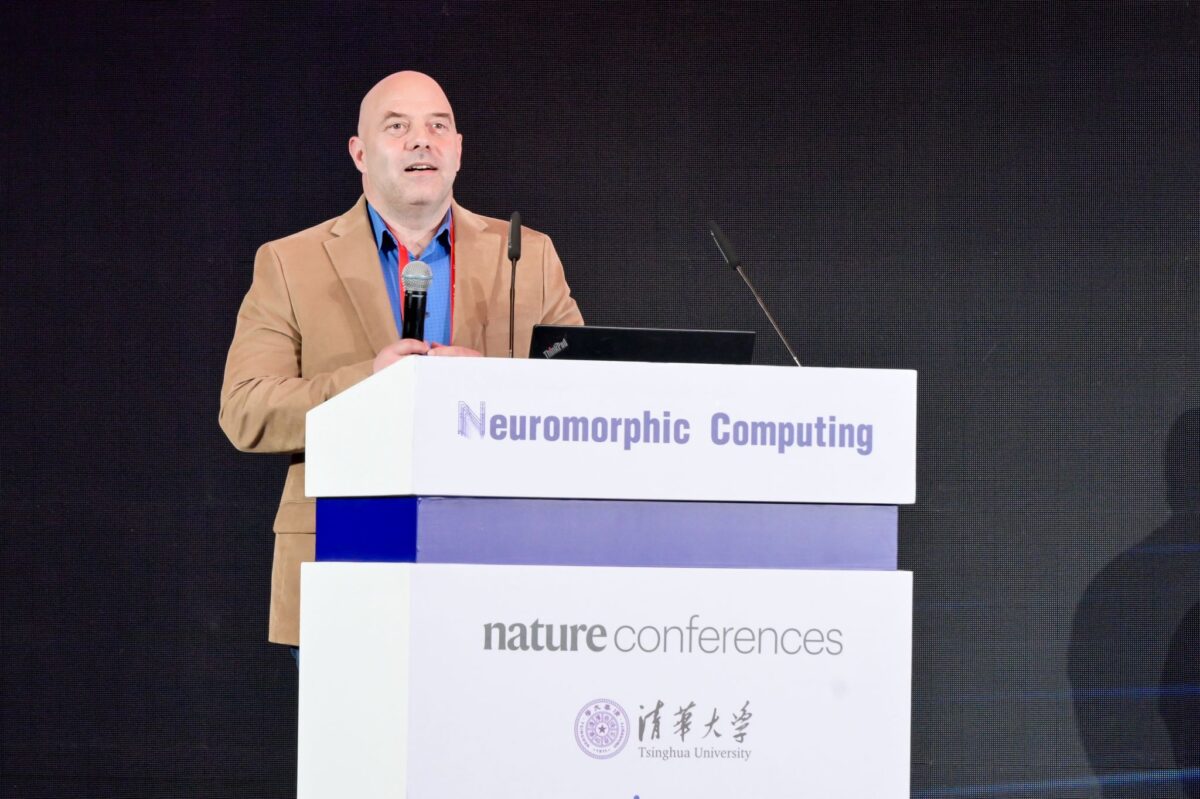
The MemrisTec members Ilia Valov and John Paul Strachan (both from FZ Jülich) were choosen by the Nature editors to speak at the 2nd Nature Conference on Neuromorphic Computing in Shangri-La Beijing, China, from October 13, 2024 – October 16, 2024.

5 years after the 1st conference they will discuss in an interdisciplinary audience how to create more efficient and intelligent computing systems. Among the further speakers is also one member of the MemrisTec International Advisory Committee, Wei Lu from the University of Michigan, USA.

Categories
News

Girls’Day on 25.04.2024

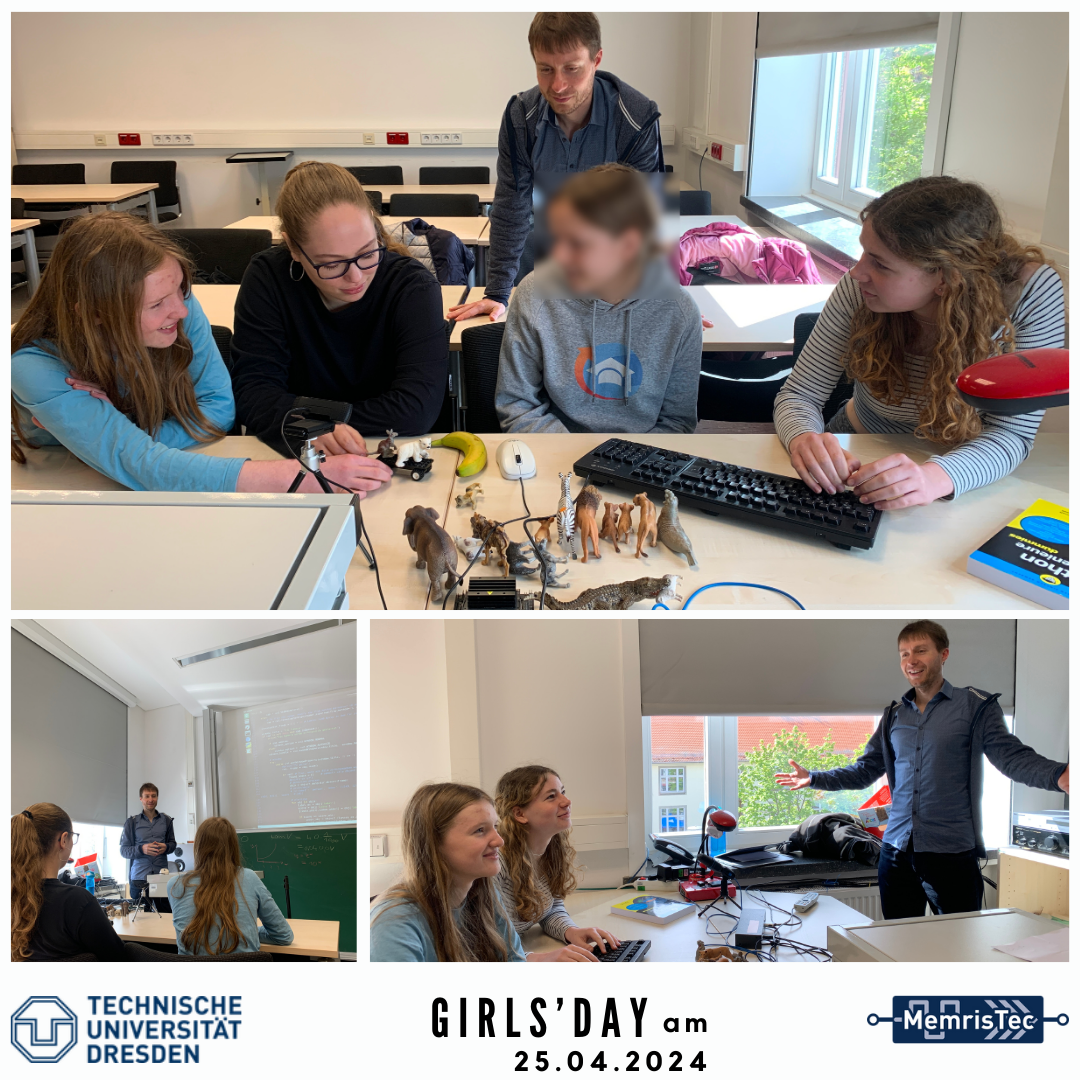
We would like to thank everyone who took part in our Girls’Day 2024! Dr. Carsten Knoll led an engaging hands-on session exploring artificial intelligence through object recognition using mini computers. The enthusiasm and curiosity of the young girls was truly inspiring. We hope the participants enjoyed the experience and learned some valuable insights which they can implement in their scientific journey.

Moreover, we look forward to more successful Girl’s Day events in the future.

Categories
MemTDE News

MemrisTec Young Researcher Awards for MemTDE

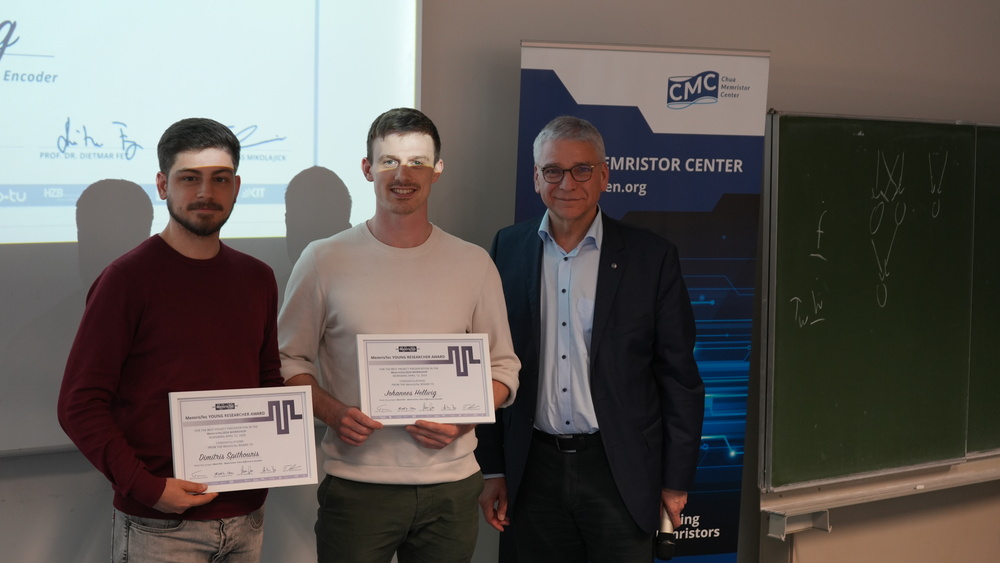
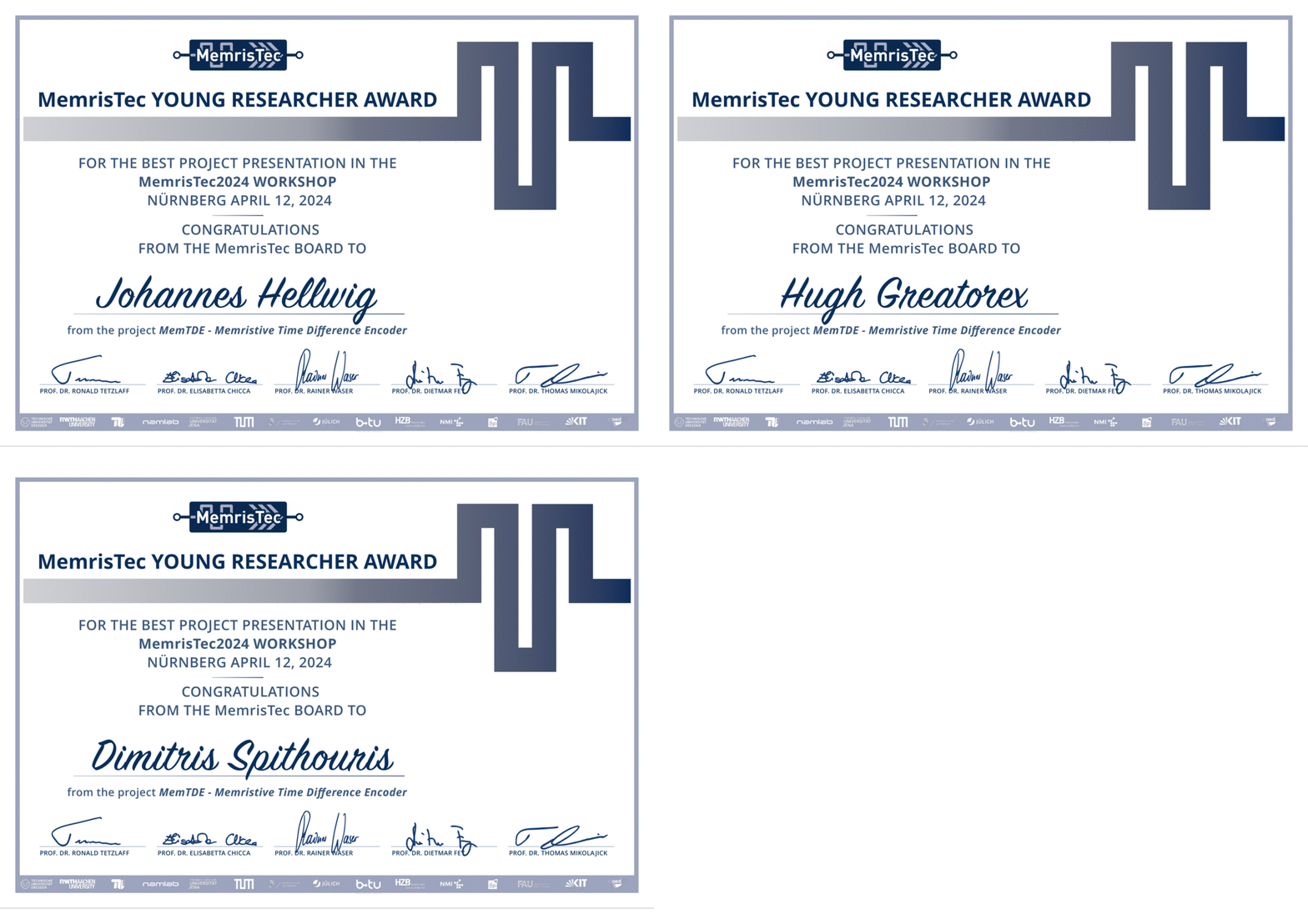
The awards for the best presentation at the MemrisTec2024 workshop went to the young scientists from the project MemTDE (Memristive Time Difference Encoder):

Johannes Hellwig and Dimitris Spithouris from the Peter Grünberg Institute 7 at Forschungszentrum Jülich as well as Hugh Greatorex from CogniGron at the University of Groningen in the Netherlands were rated best in terms of their presentation skills by the jury from the MemrisTec Board.

The annual workshop of the MemrisTec priority program took place this year in Nuremberg at FAU Erlangen-Nürnberg. The host was Prof. Dr. Dietmar Fey. The location and time of the workshop were specifically chosen so that demonstrators created during the first funding phase could also be presented at the embedded world trade fair.

We wish the MemTDE project team all the best for the future!